Jan 26, 2026
A Broad Overview on Visual World Building
Creating a believable world can be overwhelming without structure. Imagination is limitless, but without a plan, ideas can quickly lose focus. This article outlines the way I approach visual world building as a visual artist. It is not a strict step-by-step guide, but a breakdown of my thinking, planning, and problem-solving process when designing worlds. World building for clients and personal projects share similar foundations, but differ in mindset. Collaboration requires compromise, problem solving, and alignment within given parameters, while personal work is quite the opposite, where freedom to create your own rules can be an additional issue, and the problem solving is more internal and not dependent on others. I'll be diving into the latter and will save the client/collaborative work in a later section.

Ed Laag
Principal Concept Artist at Dardo Studios
World building for yourself as a practice.
World building for clients and personal projects share similar foundations, but differ in mindset. Collaboration requires compromise, problem solving, and alignment within given parameters, while personal work is quite the opposite, where freedom to create your own rules can be an additional issue, and the problem solving is more internal and not dependent on others.
I'll be diving into the latter and will save the client/collaborative work in a later section.
Pulling from your own experiences
At the core of personal world building are lived experiences. Our backgrounds, memories, and meaningful moments shape how we perceive and design worlds. Drawing from personal experiences helps avoid generic ideas and leads to more authentic, unique visual languages. Media also plays a major role : books, films, games, and comics influence our tastes over time, and originality often comes from blending these influences with personal experience.
Broad ideas
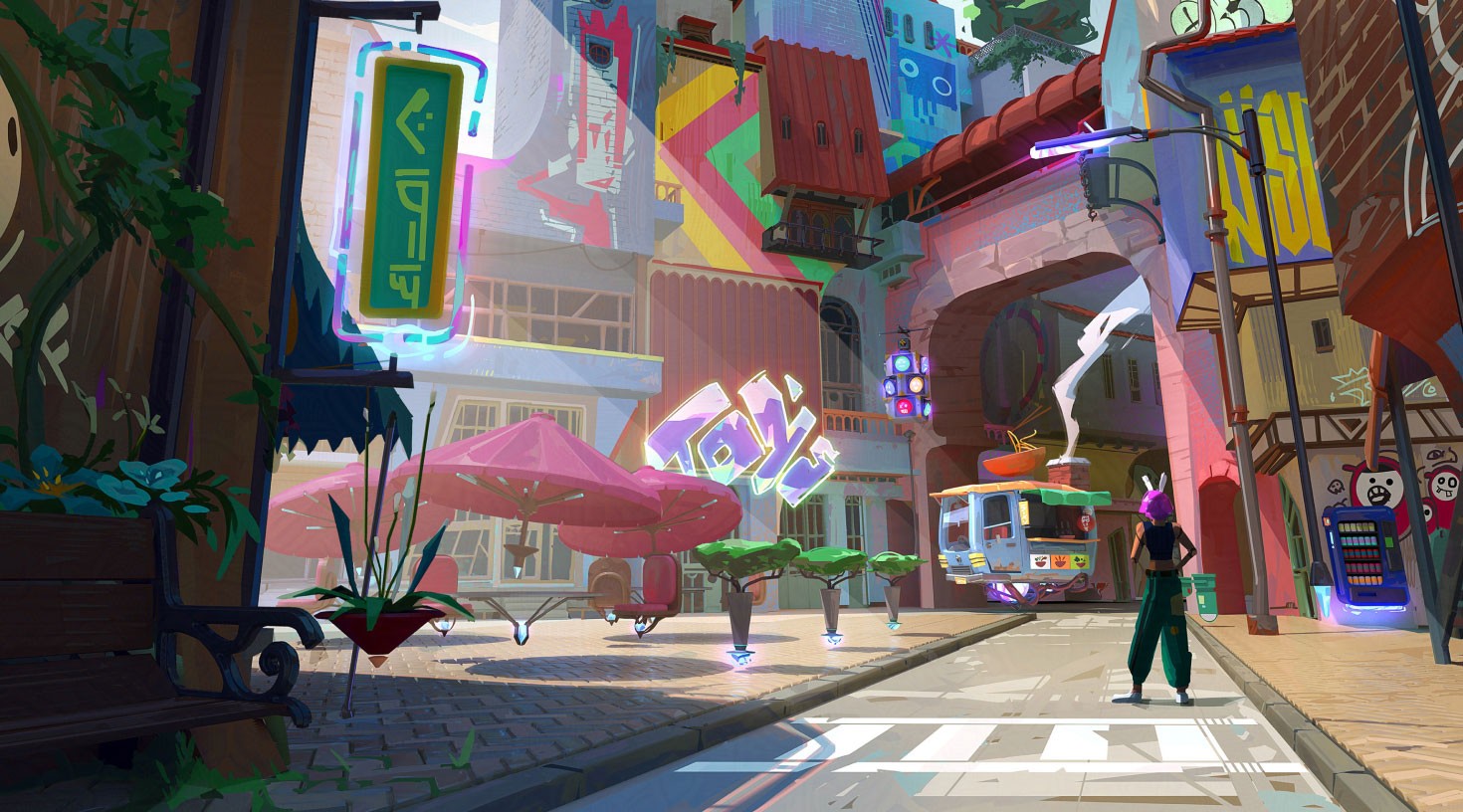
As I start a new project I tend to ask myself what kind of genre I want to create in this exercise. Is it grounded in the real world, sci fi, fantasy, supernatural and/or comic inspired? As someone who appreciates all sorts of genres it can be difficult to choose but I usually choose something that I haven't created in a while whether it be in practice or professional. Once I choose a genre, for instance Sci-fi, I'll add a narrative element by giving the genre a type of story. For example, coming of age is a theme I am fond of because of the types of movies I enjoyed as a youth. After I commit to those two choices, I have a general sense of what I want to create.
Cultures, time/setting
After choosing the genre and the type of storytelling I want to explore, I get into a bit more specific elements of the world. Is there a certain culture that can portray the types of themes and stories I want to tell through the historical understanding of these cultures. Culture is a big visual indicator where an artist wants to take things visually. Research and the learning of the history of cultures and applying them respectfully can ultimately enhance the credibility of your world. There should be layers to what you create and to avoid a surface level type of design is to incorporate nuanced layers of cultural themes and ideas. There can be more than one culture depending on what kind of story you want to tell, whether you want to intertwine past and present or create contrast in visual themes and language. Researching cultures can also help the artist understand architecture, art , design and everything else that comes with civilizations from different regions of the world.
I also consider the time where these events would take place. Will it be in a futuristic setting, medieval or something more in the modern age. Most of the time the genre you choose will help dictate those elements. That way the architecture, weapons, interior design and other props are visually coherent and visually align with one another. There shouldn't be visually opposing elements in design unless juxtaposition is warranted or deliberate.
Sketches
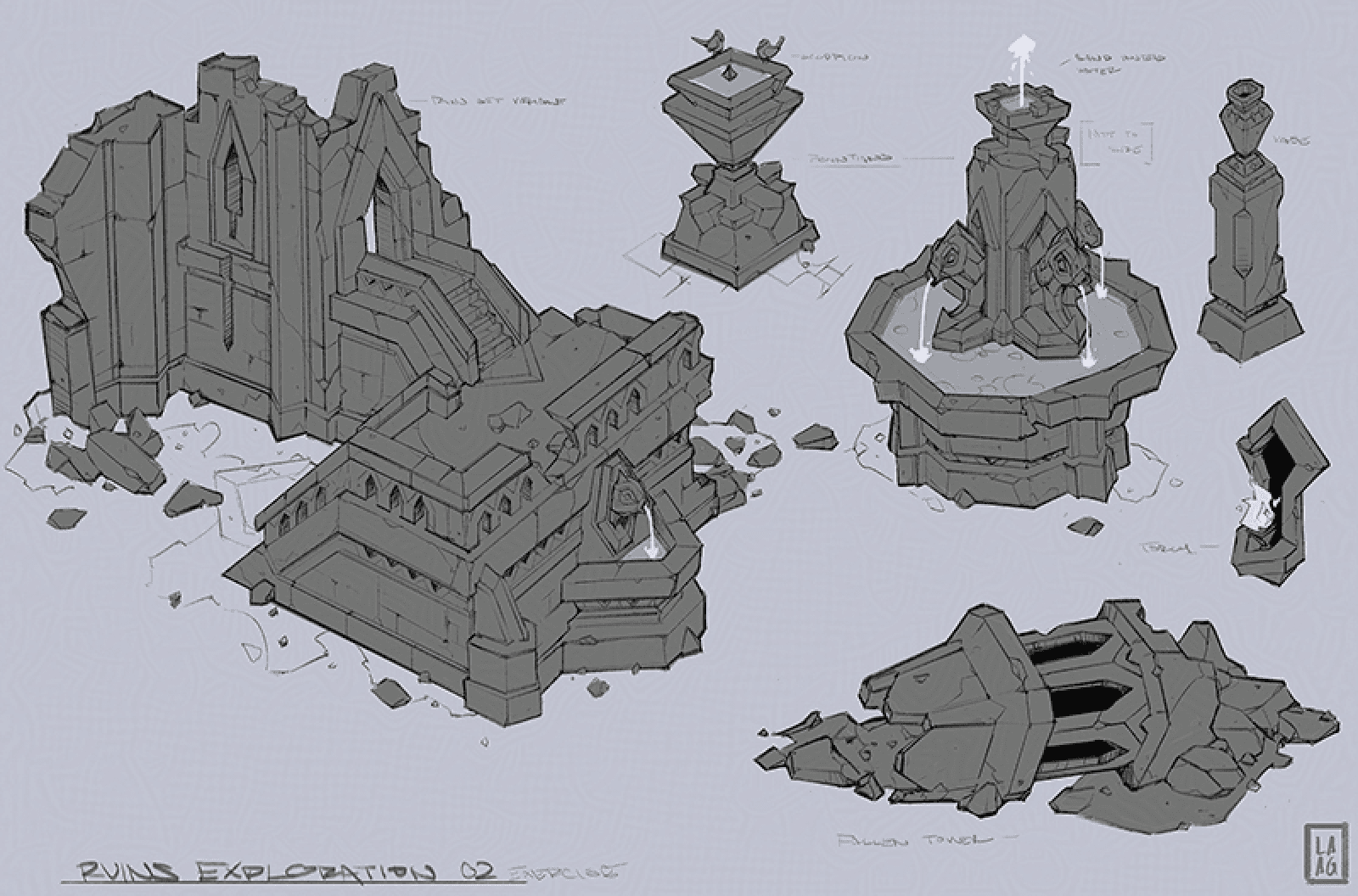
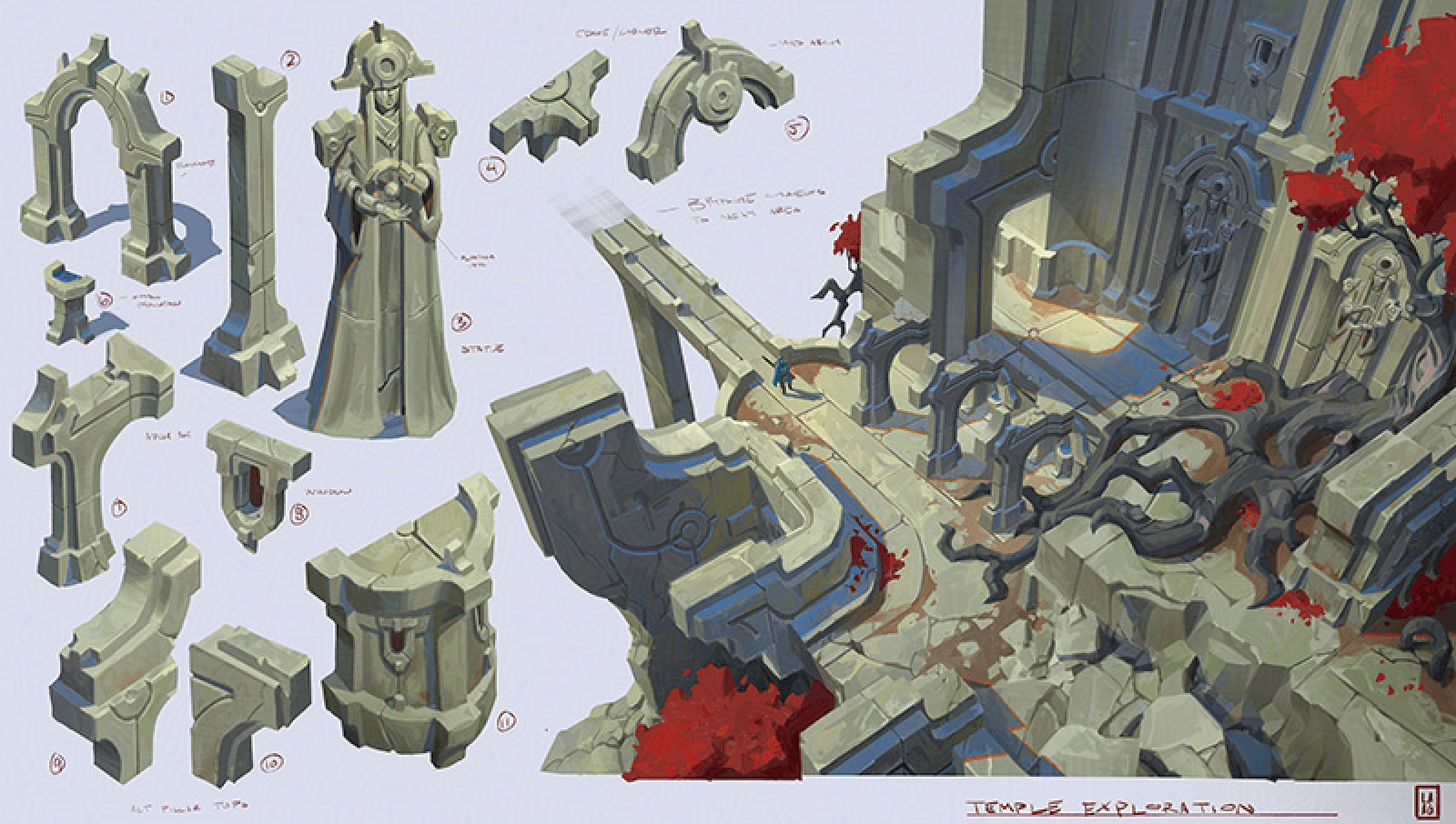
After collecting a good solid batch of references, which I usually stick to a page so as not to go overboard, I start to do sketches. Depending if I'm creating an illustration or an exploration sheet, my approaches are differ. If it's an illustration, I start with a composition sketch. Usually if it's a personal project I have a very clear picture of what I want to do so I just do a single sketch, but if it's a client I sketch out at least 3 compositions. The sketches usually have a narrative attached to them, describing or showing a certain part of the story. Sketches generally serve as your base. I usually like to get composition and values in a good place for an illustration sketch. For an exploration sheet, I tend to use line and simply shading to get a quicker result before getting into rendering.
Environmental Story Telling
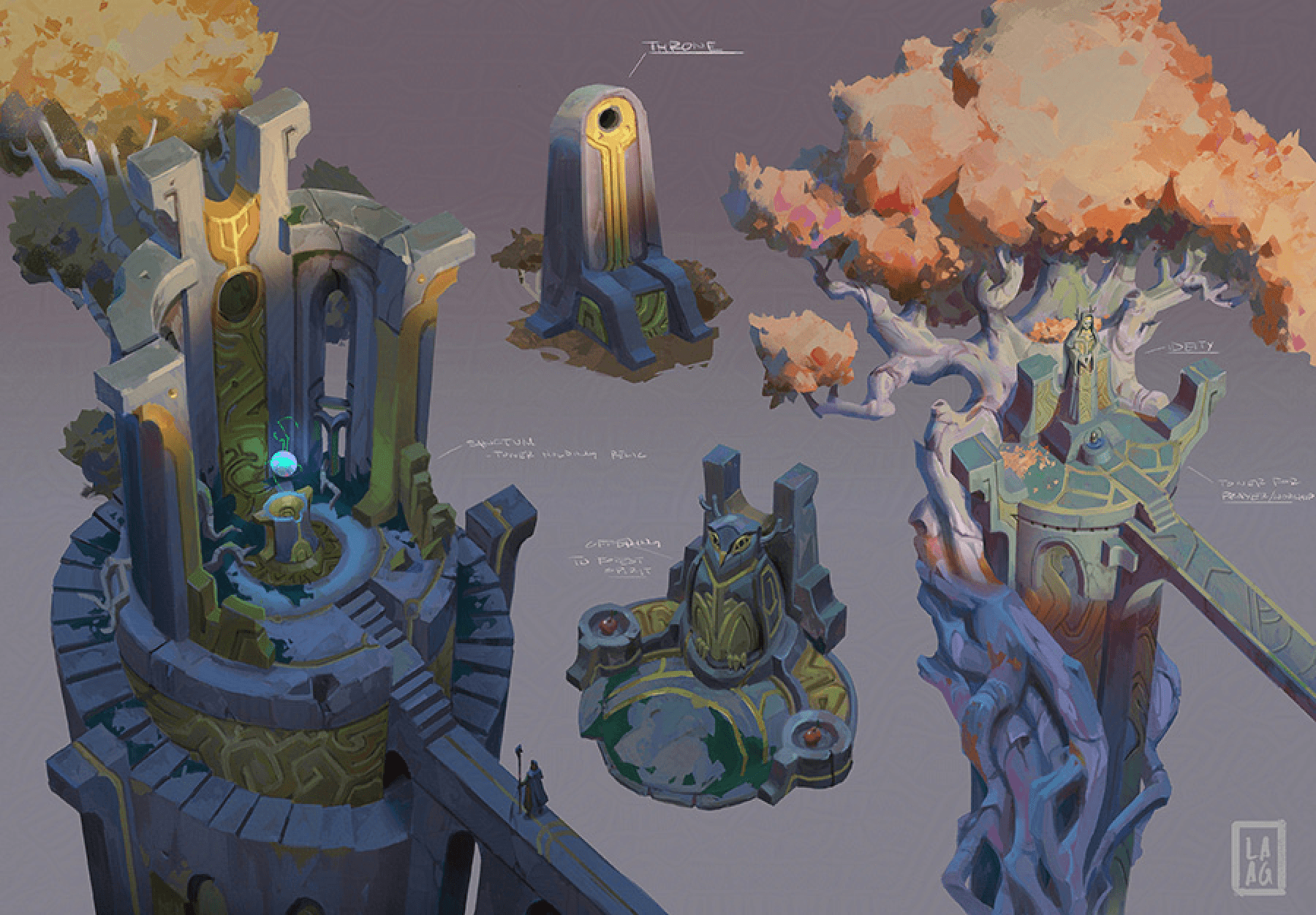
When designing architecture, props, vehicles, or anything that would populate the environment, I try to do so with the intention of adding history to the object. There are environments that are integral to the story and should have more detail and narrative infused in their design but I try to make sure not to neglect the secondary objects as well. It's their wear and tear, the selective patterns that decorate the walls, the past civilization that inhabited the location that bring environments to life and bring a certain gravitas to them. Each design choice can either build your narrative or muddy things up and take the viewer out of the immersion. Tying every aspect of the environment creates a coherent language that can help visual cohesiveness.
Mood
The moods of each environment is a powerful tool to help express the feelings one would experience being in one of these places. What kind of weather constantly cycles through the location is something I ask myself when starting to apply the mood to outdoor environments just as an example. What kind of lighting conveys the right message for this place and does it make sense to place the character here at this time of the narrative. What story do you want to tell in this specific place? Does it invoke a sense of mystery? Or is it a place of empowerment for the character. There are many ways to frame and visualize a place to direct and push the narrative forward. I think being meticulous about the question you ask yourself is the best way to solve those problems.
Style
Some additional things I think about or plan while world building is a certain visual style to a new property. Visual development is a subject entirely that any artist would benefit to study. I think, in my opinion, visual development is essential if you want to create something more striking and original. From someone who has had to adapt and learn different rendering styles, I try to apply appropriate techniques that would compliment the type of world being created. The right visual appeal can elevate the experience. There are techniques that resonate well with certain themes and genres. Some styles are more universal, others are more niche and I find the niche styles that push a genre into their intuitive direction the most intriguing and alluring.
Creating worlds for clients and with teams.
As I mentioned earlier, world building for personal projects is a more introspective activity, while collaboration with clients or teammates have certain parameters that an artist needs to navigate through. Usually there is an existing narrative and rules from the start of the project, where you, the artist, is given the ability to design freely. This stage is often referred to as the "blue sky" stage. The collaboration between the artist and the others involved need to have clear communication to make sure the overall vision is carried through for visual cohesion to be reached.
Most of the subjects I mentioned previously about world building still apply when collaborating with others but the element of compromise and pivoting when the team needs to change an aspect of the design or narrative needs to be highlighted. Being a flexible artist and teammate will lend more opportunities to sync and flow with the team when creating. This doesn't mean not to voice your opinion or not to catch any problems but to have an open mind and even provide multiple solutions when directing the design and visuals of the project.
Last but not least, I just want to mention that world building is an exercise of critical thinking and something that takes time, effort, planning and creative energy. It takes time, iteration, and reflection, and it’s a process meant to be enjoyed, not rushed.
Looking for a
World Building
partner?
Jan 26, 2026
A Broad Overview on Visual World Building
Creating a believable world can be overwhelming without structure. Imagination is limitless, but without a plan, ideas can quickly lose focus. This article outlines the way I approach visual world building as a visual artist. It is not a strict step-by-step guide, but a breakdown of my thinking, planning, and problem-solving process when designing worlds. World building for clients and personal projects share similar foundations, but differ in mindset. Collaboration requires compromise, problem solving, and alignment within given parameters, while personal work is quite the opposite, where freedom to create your own rules can be an additional issue, and the problem solving is more internal and not dependent on others. I'll be diving into the latter and will save the client/collaborative work in a later section.
Ed Laag
Principal Concept Artist at Dardo Studios
World building for yourself as a practice.
World building for clients and personal projects share similar foundations, but differ in mindset. Collaboration requires compromise, problem solving, and alignment within given parameters, while personal work is quite the opposite, where freedom to create your own rules can be an additional issue, and the problem solving is more internal and not dependent on others.
I'll be diving into the latter and will save the client/collaborative work in a later section.
Pulling from your own experiences
At the core of personal world building are lived experiences. Our backgrounds, memories, and meaningful moments shape how we perceive and design worlds. Drawing from personal experiences helps avoid generic ideas and leads to more authentic, unique visual languages. Media also plays a major role : books, films, games, and comics influence our tastes over time, and originality often comes from blending these influences with personal experience.
Broad ideas
As I start a new project I tend to ask myself what kind of genre I want to create in this exercise. Is it grounded in the real world, sci fi, fantasy, supernatural and/or comic inspired? As someone who appreciates all sorts of genres it can be difficult to choose but I usually choose something that I haven't created in a while whether it be in practice or professional. Once I choose a genre, for instance Sci-fi, I'll add a narrative element by giving the genre a type of story. For example, coming of age is a theme I am fond of because of the types of movies I enjoyed as a youth. After I commit to those two choices, I have a general sense of what I want to create.
Cultures, time/setting
After choosing the genre and the type of storytelling I want to explore, I get into a bit more specific elements of the world. Is there a certain culture that can portray the types of themes and stories I want to tell through the historical understanding of these cultures. Culture is a big visual indicator where an artist wants to take things visually. Research and the learning of the history of cultures and applying them respectfully can ultimately enhance the credibility of your world. There should be layers to what you create and to avoid a surface level type of design is to incorporate nuanced layers of cultural themes and ideas. There can be more than one culture depending on what kind of story you want to tell, whether you want to intertwine past and present or create contrast in visual themes and language. Researching cultures can also help the artist understand architecture, art , design and everything else that comes with civilizations from different regions of the world.
I also consider the time where these events would take place. Will it be in a futuristic setting, medieval or something more in the modern age. Most of the time the genre you choose will help dictate those elements. That way the architecture, weapons, interior design and other props are visually coherent and visually align with one another. There shouldn't be visually opposing elements in design unless juxtaposition is warranted or deliberate.
Sketches
After collecting a good solid batch of references, which I usually stick to a page so as not to go overboard, I start to do sketches. Depending if I'm creating an illustration or an exploration sheet, my approaches are differ. If it's an illustration, I start with a composition sketch. Usually if it's a personal project I have a very clear picture of what I want to do so I just do a single sketch, but if it's a client I sketch out at least 3 compositions. The sketches usually have a narrative attached to them, describing or showing a certain part of the story. Sketches generally serve as your base. I usually like to get composition and values in a good place for an illustration sketch. For an exploration sheet, I tend to use line and simply shading to get a quicker result before getting into rendering.
Environmental Story Telling
When designing architecture, props, vehicles, or anything that would populate the environment, I try to do so with the intention of adding history to the object. There are environments that are integral to the story and should have more detail and narrative infused in their design but I try to make sure not to neglect the secondary objects as well. It's their wear and tear, the selective patterns that decorate the walls, the past civilization that inhabited the location that bring environments to life and bring a certain gravitas to them. Each design choice can either build your narrative or muddy things up and take the viewer out of the immersion. Tying every aspect of the environment creates a coherent language that can help visual cohesiveness.
Mood
The moods of each environment is a powerful tool to help express the feelings one would experience being in one of these places. What kind of weather constantly cycles through the location is something I ask myself when starting to apply the mood to outdoor environments just as an example. What kind of lighting conveys the right message for this place and does it make sense to place the character here at this time of the narrative. What story do you want to tell in this specific place? Does it invoke a sense of mystery? Or is it a place of empowerment for the character. There are many ways to frame and visualize a place to direct and push the narrative forward. I think being meticulous about the question you ask yourself is the best way to solve those problems.
Style
Some additional things I think about or plan while world building is a certain visual style to a new property. Visual development is a subject entirely that any artist would benefit to study. I think, in my opinion, visual development is essential if you want to create something more striking and original. From someone who has had to adapt and learn different rendering styles, I try to apply appropriate techniques that would compliment the type of world being created. The right visual appeal can elevate the experience. There are techniques that resonate well with certain themes and genres. Some styles are more universal, others are more niche and I find the niche styles that push a genre into their intuitive direction the most intriguing and alluring.
Creating worlds for clients and with teams.
As I mentioned earlier, world building for personal projects is a more introspective activity, while collaboration with clients or teammates have certain parameters that an artist needs to navigate through. Usually there is an existing narrative and rules from the start of the project, where you, the artist, is given the ability to design freely. This stage is often referred to as the "blue sky" stage. The collaboration between the artist and the others involved need to have clear communication to make sure the overall vision is carried through for visual cohesion to be reached.
Most of the subjects I mentioned previously about world building still apply when collaborating with others but the element of compromise and pivoting when the team needs to change an aspect of the design or narrative needs to be highlighted. Being a flexible artist and teammate will lend more opportunities to sync and flow with the team when creating. This doesn't mean not to voice your opinion or not to catch any problems but to have an open mind and even provide multiple solutions when directing the design and visuals of the project.
Last but not least, I just want to mention that world building is an exercise of critical thinking and something that takes time, effort, planning and creative energy. It takes time, iteration, and reflection, and it’s a process meant to be enjoyed, not rushed.
Looking for a
World Building
partner?
Jan 26, 2026
A Broad Overview on Visual World Building
Creating a believable world can be overwhelming without structure. Imagination is limitless, but without a plan, ideas can quickly lose focus. This article outlines the way I approach visual world building as a visual artist. It is not a strict step-by-step guide, but a breakdown of my thinking, planning, and problem-solving process when designing worlds. World building for clients and personal projects share similar foundations, but differ in mindset. Collaboration requires compromise, problem solving, and alignment within given parameters, while personal work is quite the opposite, where freedom to create your own rules can be an additional issue, and the problem solving is more internal and not dependent on others. I'll be diving into the latter and will save the client/collaborative work in a later section.
Ed Laag
Principal Concept Artist at Dardo Studios
World building for yourself as a practice.
World building for clients and personal projects share similar foundations, but differ in mindset. Collaboration requires compromise, problem solving, and alignment within given parameters, while personal work is quite the opposite, where freedom to create your own rules can be an additional issue, and the problem solving is more internal and not dependent on others.
I'll be diving into the latter and will save the client/collaborative work in a later section.
Pulling from your own experiences
At the core of personal world building are lived experiences. Our backgrounds, memories, and meaningful moments shape how we perceive and design worlds. Drawing from personal experiences helps avoid generic ideas and leads to more authentic, unique visual languages. Media also plays a major role : books, films, games, and comics influence our tastes over time, and originality often comes from blending these influences with personal experience.
Broad ideas
As I start a new project I tend to ask myself what kind of genre I want to create in this exercise. Is it grounded in the real world, sci fi, fantasy, supernatural and/or comic inspired? As someone who appreciates all sorts of genres it can be difficult to choose but I usually choose something that I haven't created in a while whether it be in practice or professional. Once I choose a genre, for instance Sci-fi, I'll add a narrative element by giving the genre a type of story. For example, coming of age is a theme I am fond of because of the types of movies I enjoyed as a youth. After I commit to those two choices, I have a general sense of what I want to create.
Cultures, time/setting
After choosing the genre and the type of storytelling I want to explore, I get into a bit more specific elements of the world. Is there a certain culture that can portray the types of themes and stories I want to tell through the historical understanding of these cultures. Culture is a big visual indicator where an artist wants to take things visually. Research and the learning of the history of cultures and applying them respectfully can ultimately enhance the credibility of your world. There should be layers to what you create and to avoid a surface level type of design is to incorporate nuanced layers of cultural themes and ideas. There can be more than one culture depending on what kind of story you want to tell, whether you want to intertwine past and present or create contrast in visual themes and language. Researching cultures can also help the artist understand architecture, art , design and everything else that comes with civilizations from different regions of the world.
I also consider the time where these events would take place. Will it be in a futuristic setting, medieval or something more in the modern age. Most of the time the genre you choose will help dictate those elements. That way the architecture, weapons, interior design and other props are visually coherent and visually align with one another. There shouldn't be visually opposing elements in design unless juxtaposition is warranted or deliberate.
Sketches
After collecting a good solid batch of references, which I usually stick to a page so as not to go overboard, I start to do sketches. Depending if I'm creating an illustration or an exploration sheet, my approaches are differ. If it's an illustration, I start with a composition sketch. Usually if it's a personal project I have a very clear picture of what I want to do so I just do a single sketch, but if it's a client I sketch out at least 3 compositions. The sketches usually have a narrative attached to them, describing or showing a certain part of the story. Sketches generally serve as your base. I usually like to get composition and values in a good place for an illustration sketch. For an exploration sheet, I tend to use line and simply shading to get a quicker result before getting into rendering.
Environmental Story Telling
When designing architecture, props, vehicles, or anything that would populate the environment, I try to do so with the intention of adding history to the object. There are environments that are integral to the story and should have more detail and narrative infused in their design but I try to make sure not to neglect the secondary objects as well. It's their wear and tear, the selective patterns that decorate the walls, the past civilization that inhabited the location that bring environments to life and bring a certain gravitas to them. Each design choice can either build your narrative or muddy things up and take the viewer out of the immersion. Tying every aspect of the environment creates a coherent language that can help visual cohesiveness.
Mood
The moods of each environment is a powerful tool to help express the feelings one would experience being in one of these places. What kind of weather constantly cycles through the location is something I ask myself when starting to apply the mood to outdoor environments just as an example. What kind of lighting conveys the right message for this place and does it make sense to place the character here at this time of the narrative. What story do you want to tell in this specific place? Does it invoke a sense of mystery? Or is it a place of empowerment for the character. There are many ways to frame and visualize a place to direct and push the narrative forward. I think being meticulous about the question you ask yourself is the best way to solve those problems.
Style
Some additional things I think about or plan while world building is a certain visual style to a new property. Visual development is a subject entirely that any artist would benefit to study. I think, in my opinion, visual development is essential if you want to create something more striking and original. From someone who has had to adapt and learn different rendering styles, I try to apply appropriate techniques that would compliment the type of world being created. The right visual appeal can elevate the experience. There are techniques that resonate well with certain themes and genres. Some styles are more universal, others are more niche and I find the niche styles that push a genre into their intuitive direction the most intriguing and alluring.
Creating worlds for clients and with teams.
As I mentioned earlier, world building for personal projects is a more introspective activity, while collaboration with clients or teammates have certain parameters that an artist needs to navigate through. Usually there is an existing narrative and rules from the start of the project, where you, the artist, is given the ability to design freely. This stage is often referred to as the "blue sky" stage. The collaboration between the artist and the others involved need to have clear communication to make sure the overall vision is carried through for visual cohesion to be reached.
Most of the subjects I mentioned previously about world building still apply when collaborating with others but the element of compromise and pivoting when the team needs to change an aspect of the design or narrative needs to be highlighted. Being a flexible artist and teammate will lend more opportunities to sync and flow with the team when creating. This doesn't mean not to voice your opinion or not to catch any problems but to have an open mind and even provide multiple solutions when directing the design and visuals of the project.
Last but not least, I just want to mention that world building is an exercise of critical thinking and something that takes time, effort, planning and creative energy. It takes time, iteration, and reflection, and it’s a process meant to be enjoyed, not rushed.
Looking for a
World Building
partner?
Our Work
Our Work
Our Work


Illustration


VFX
/
Tech Art Graphics
/
Lighting

3D Props
/
3D Character Art

Illustration
/
Concept Art
Illustration
VFX
/
Tech Art Graphics
/
Lighting
3D Props
/
3D Character Art
Illustration
VFX
/
Tech Art Graphics
/
Lighting
3D Props
/
3D Character Art